
Combining nature and play: Tips for integrating nature play into your playground

With municipalities around the world looking to integrate more sustainable and inclusive play spaces into their communities, nature-based playgrounds have become incredibly popular. They offer powerful opportunities for children to connect to the environment around them and help support healthy development. Nature play opportunities allow children to return to what they instinctively crave: sensory-rich and imaginative outdoor experiences.
Due to the rise in popularity of playgrounds inspired by nature, ensuring that a community has the right playground design is essential. Not only do you want to create a playground that features play equipment that caters to all ages and abilities, but you also want to create a playground design that is going to continue to grow with the community, delivering exciting play opportunities for years to come.
What is nature play and why does it matter?
So, what exactly is nature play? By definition, it is unstructured play that uses natural elements such as water, logs, rocks, plants and dirt. Nature-based playgrounds boast several great benefits for children, including boosts in creativity and imagination, the enhancement of physical development through climbing and balance, and encouraging risk-taking, resilience, and problem-solving.
Play is an essential part of every child’s development, so creating nature-based play spaces is a great way to encourage kids to spend more time outside while still getting all of the benefits that come with play. Several playground manufacturers have created nature play lines that highlight these benefits. One of Parkworks’ top manufacturers, KOMPAN, boasts a wide range of nature play equipment and structures made from European Robinia wood. Using natural materials allows KOMPAN to create individual features that each tell their own unique story as kids play and allows Parkworks to design incredible playgrounds that blur the lines between nature and play.
Core design principles for nature play
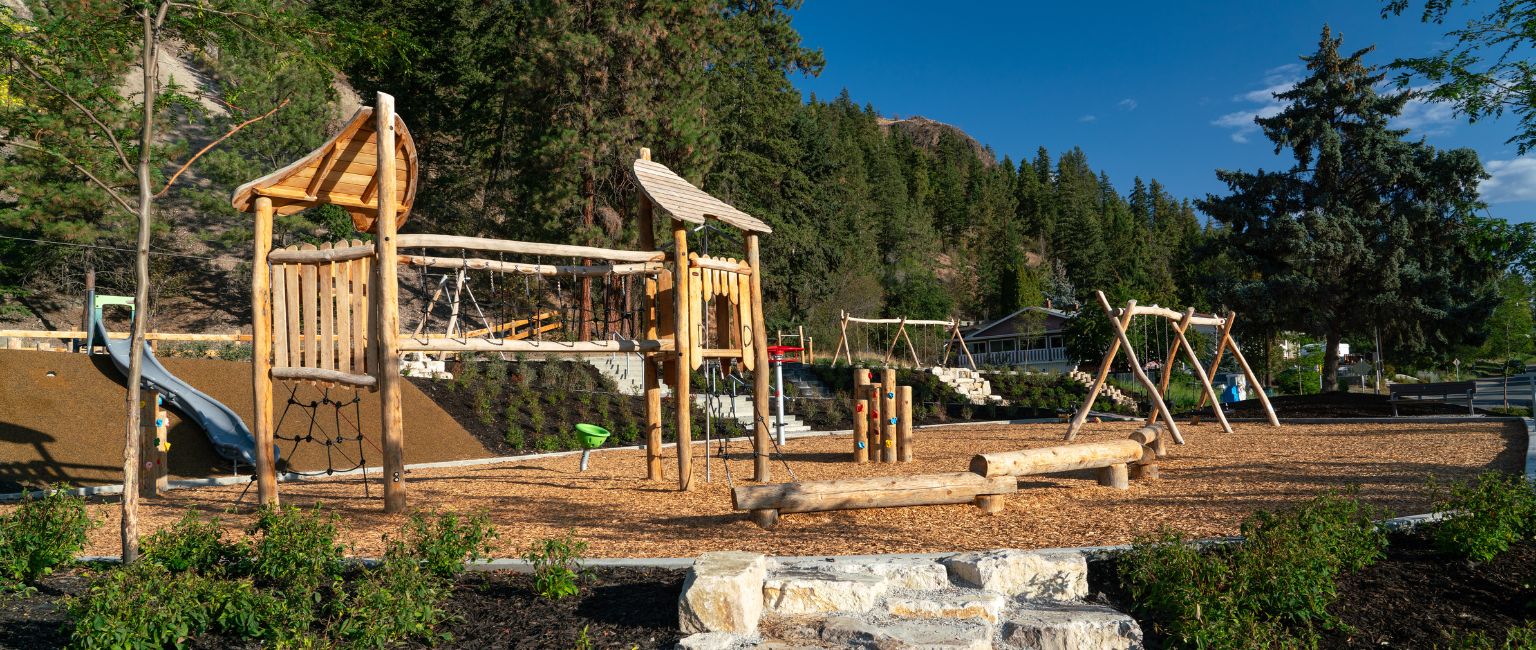
When it comes to designing a nature play space, there are a few key design principles to consider. It is important to remember to embrace the organic shapes and natural textures that are used in the play space. Wooden play structures are made from natural materials, so the final product may vary slightly in appearance from what is shown online. Your playground might consist of a more neutral, wood-toned colour palette compared to the bright, bold play structures you typically expect in a playground. Rest assured that you’re going to get just as much play value from a nature-based playground as a traditional one, with natural materials and elements adding unique character to your play space.
You’ll also want to factor sensory diversity into your playground design, leveraging things like texture, sound, and movement to ensure that you create a play space that excites all of the senses. Features such as sensory panels and playhouses are great options for engaging kids in play that falls outside of the typical swinging, sliding and climbing that happens on larger play structures, allowing them to move, spin, rotate, and engage their senses as they play.
Nature play features to consider
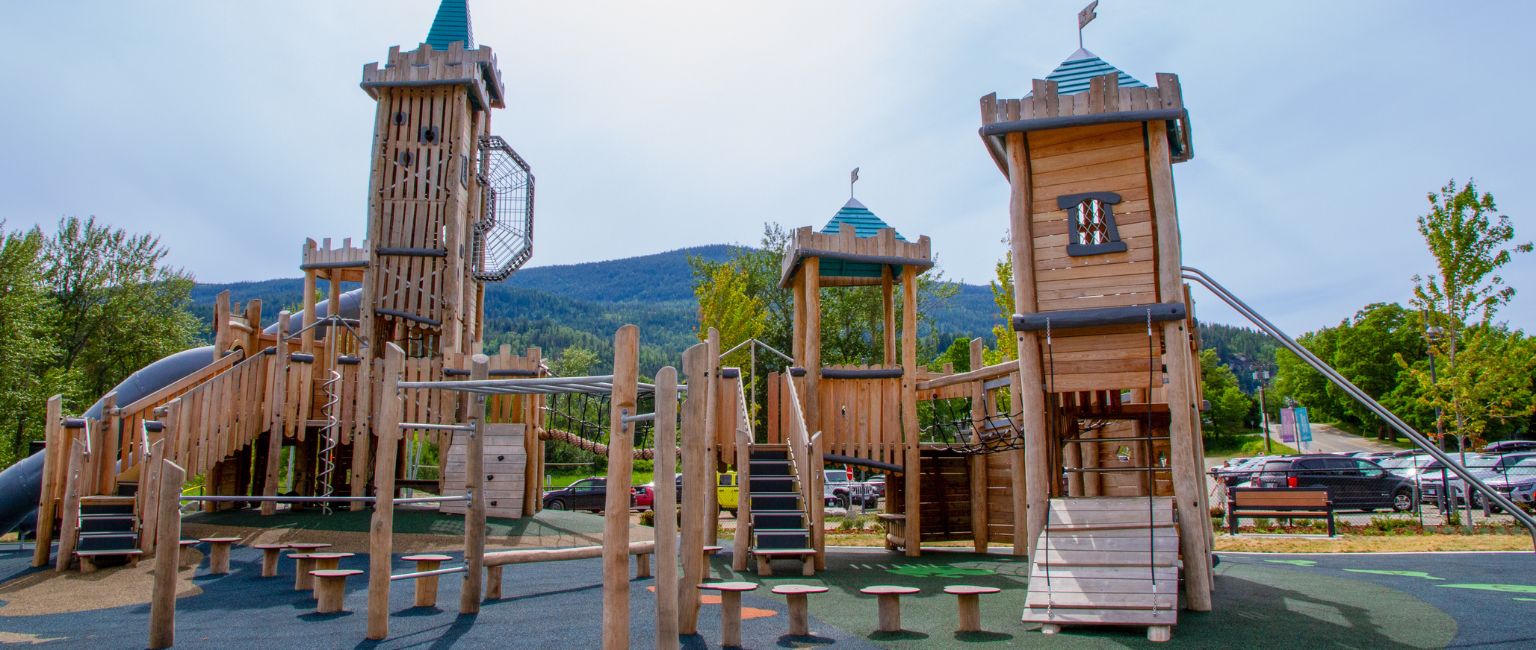
Choosing the right features for a nature-based playground can be overwhelming, but the Parkworks team will help guide you in the right direction. They will help identify the features and structures that will maximize the play value of your space, giving you the biggest bang for your buck. KOMPAN’s Robina nature play line is a great place to start, as they’ve got natural features for just about everything from swing sets and climbing trails to epic themed structures like ships and castles.
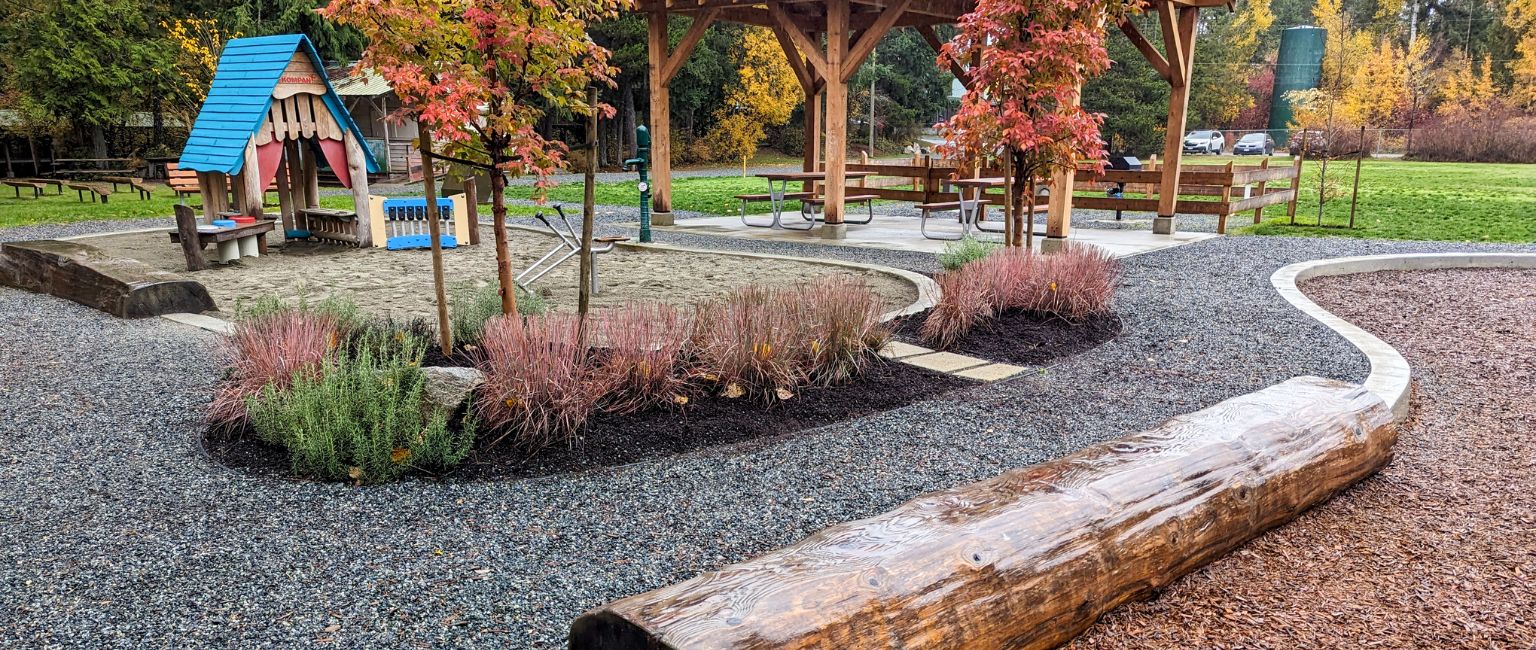
Natural elements such as tree stumps, boulders, and earth mounds can be worked into the design of the playground to also act as fun play opportunities for kids. Transform fallen logs into balance beams, create tunnels, and build timber steppers to challenge kids to be brave and take risks as they play.
Integrating sand and water play zones, such as a splash pad or water table, is a great way to add other sensory elements to the play space. The addition of water play can also help create a cooling zone for the community throughout the summer months. Adding native gardens and other low-maintenance vegetation is also a great way to round out a nature-focused playground design and create a space that will engage kids on a sensory level.

Adding nature to existing playgrounds
For municipalities that might have existing playgrounds that they’d like to update to incorporate more nature-play elements, there are lots of great ways to do so! If a full-scale renovation is in order, consider swapping the old playground equipment for natural play structures to create a new, exciting play space. This is a great way to utilize the existing footprint of a play space while providing a fresh new look with unique, dynamic playground features.
If you’re looking to add some natural play elements into an existing playground, without having to replace existing structures, there are lots of great options available to you. Updating the landscaping of the space to help define paths and zones is a great way to easily add nature to the space. Upgrading the playground surfacing to wood fiber or natural mulch is also a fantastic option. Many parks and playgrounds also utilize planters and raised garden beds to introduce greenery to the space, in some cases even creating communal gardens that can be utilized by anyone in the community. They provide a unique opportunity for parents to indulge in their green thumbs while kids play to their hearts' content on the playground!
Sustainability and long-term impact
One of the best things about designing a nature-based playground utilizing natural features is the fact that it helps to create a more sustainable play space. Working with natural materials such as wood and rock is a great place to start, as these materials work with the environment, rather than against it. Wherever possible, utilize locally sourced, durable, and renewable materials for the playground, like boulders and stones as seating options, or wood fiber for surfacing.
Blending nature and play doesn’t just create beautiful spaces, it’s a smart, sustainable, and resourceful choice that not only promotes well-being but also helps deepen children’s connections to the world around them. The Parkworks team believes in creating play spaces that honour nature and provide play for people of all ages and abilities.