
How play-based learning on the playground shapes future problem solvers
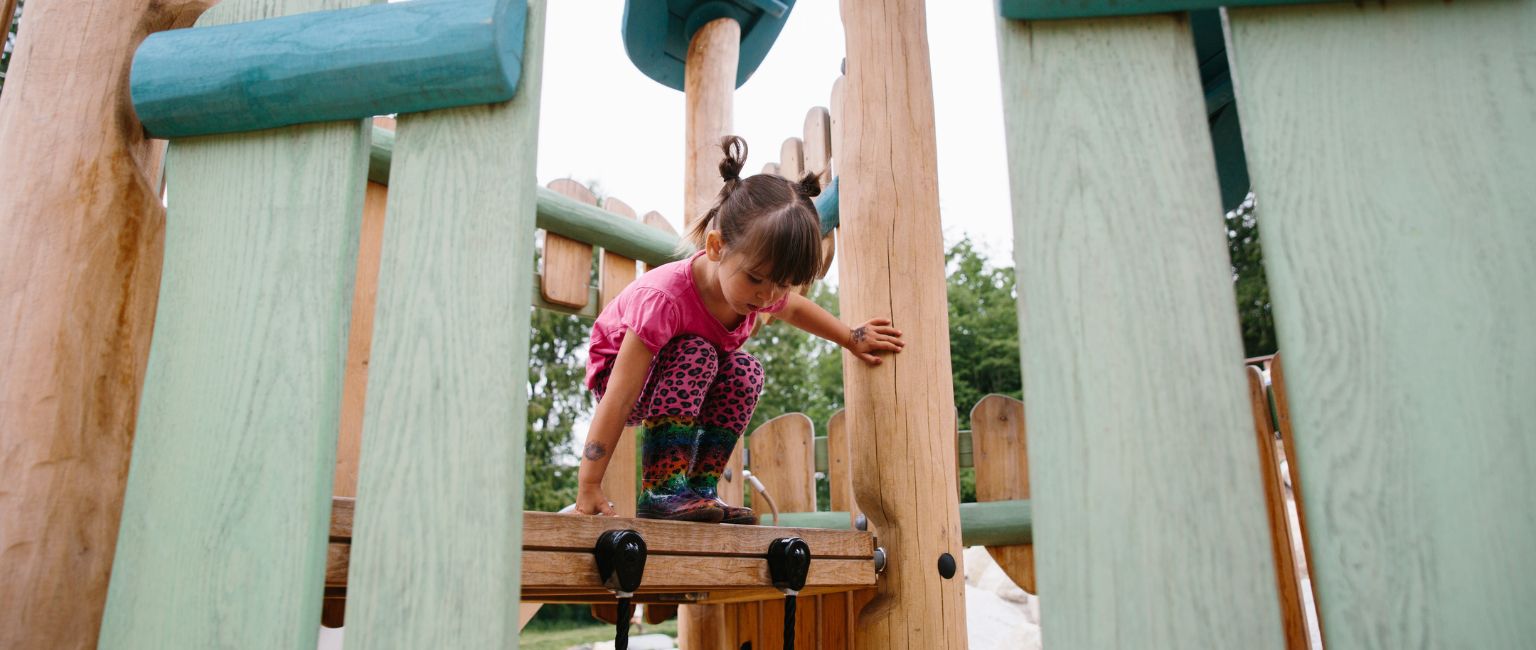
Playgrounds are often seen as the place kids go to run, climb, and burn off energy. And they absolutely are. But at Parkworks, we know great playgrounds do much more than that. They create space for children to use their imagination, solve problems, build confidence, and learn how to navigate the world around them.
In a world where creativity, adaptability, and collaboration matter more than ever, play helps children build these skills every day. Every route chosen, every challenge assessed, and every game invented becomes part of how they learn.
When playgrounds are designed to support play-based learning, they help shape confident, capable future problem solvers.
What is play-based learning in a playground setting?
Play-based learning is a child-led approach to development where learning happens through exploration, movement, imagination, and interaction.
On the playground, this kind of learning happens naturally. It shows up when children decide how to approach a climbing structure, invent games with friends, or test their limits in new ways. It happens when they discover a new use for a piece of equipment or turn an ordinary play feature into part of an imagined world. In each of these moments, children are learning how to solve problems, think creatively, and respond to new situations.
Unlike structured activities that often lead to one expected outcome, playground play invites open-ended experiences. Children can think independently, learn by doing, and explore challenges at their own pace. In the process, they begin to better understand their own abilities, their comfort zones, and how to interact with others.
How playgrounds support problem-solving skills
Critical thinking and decision-making are built into the playground experience. Every structure, pathway, and play feature presents children with choices. How do I get to the top? Which route should I take? Is this challenge right for me, or should I try something different? As children move through the playground, they learn to evaluate options, test outcomes, and make decisions in the moment.
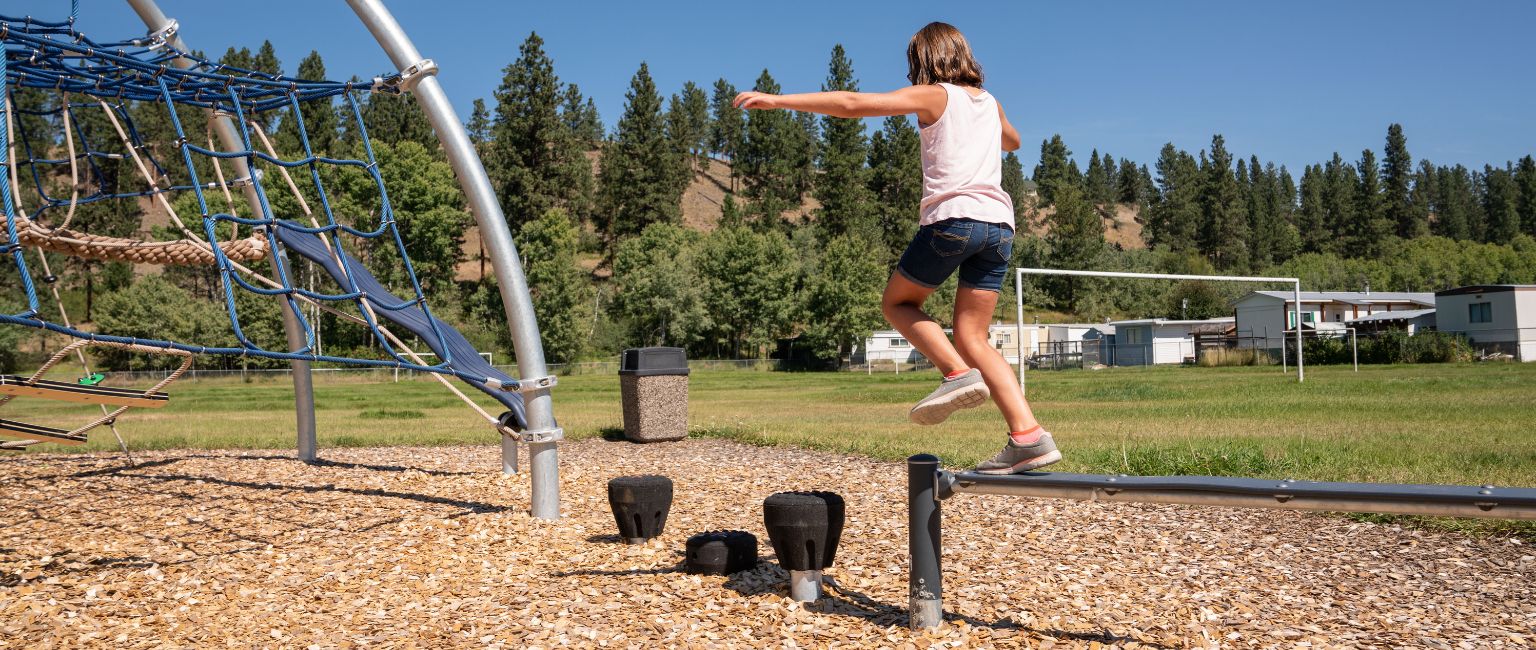
Playgrounds also create powerful opportunities for creativity and imagination. Spaces with open-ended play features invite children to create their own experiences. A tower becomes a castle. Balance posts become stepping stones across a river of lava. A play structure becomes the backdrop for an entirely new story. This kind of imaginative play builds flexible thinking and helps children come up with original ideas, solutions, and ways of connecting with others.
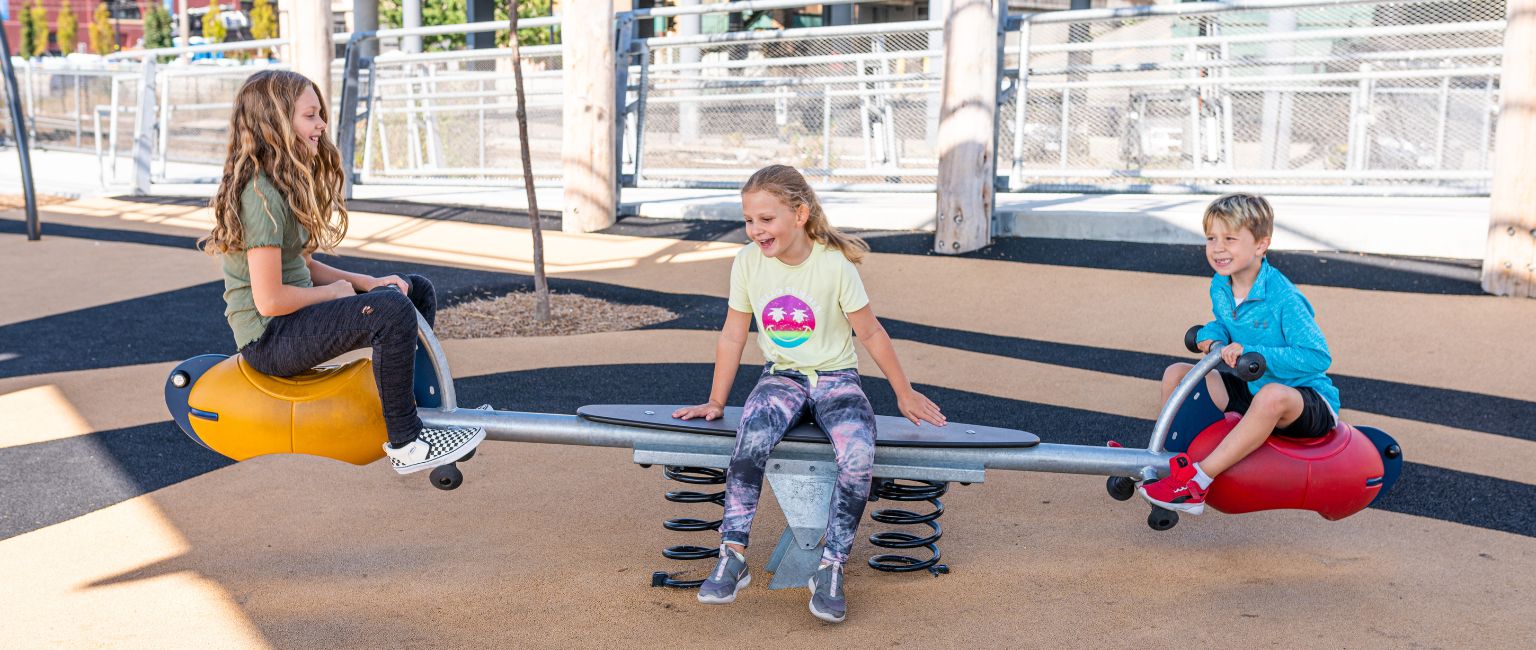
Because playgrounds are social spaces by nature, they also help children strengthen communication and collaboration. Through group play, kids learn how to take turns, explain ideas, negotiate roles, work through disagreements, and move toward shared goals. Whether they are inventing a game together or figuring out how to move through a structure as a team, they are building skills that extend far beyond the playground.
Then there is resilience. Not every attempt works the first time, and that is part of what makes play so valuable. A child may struggle to cross a balance feature, slip while climbing a rope net, or need to rethink how to join a game already in progress. The playground gives them the chance to adjust, try again, and keep going. Those moments build perseverance, confidence, and a healthier relationship with challenge.
Playground experiences that promote problem solving
Playgrounds offer countless opportunities for children to practice problem solving through different types of play.
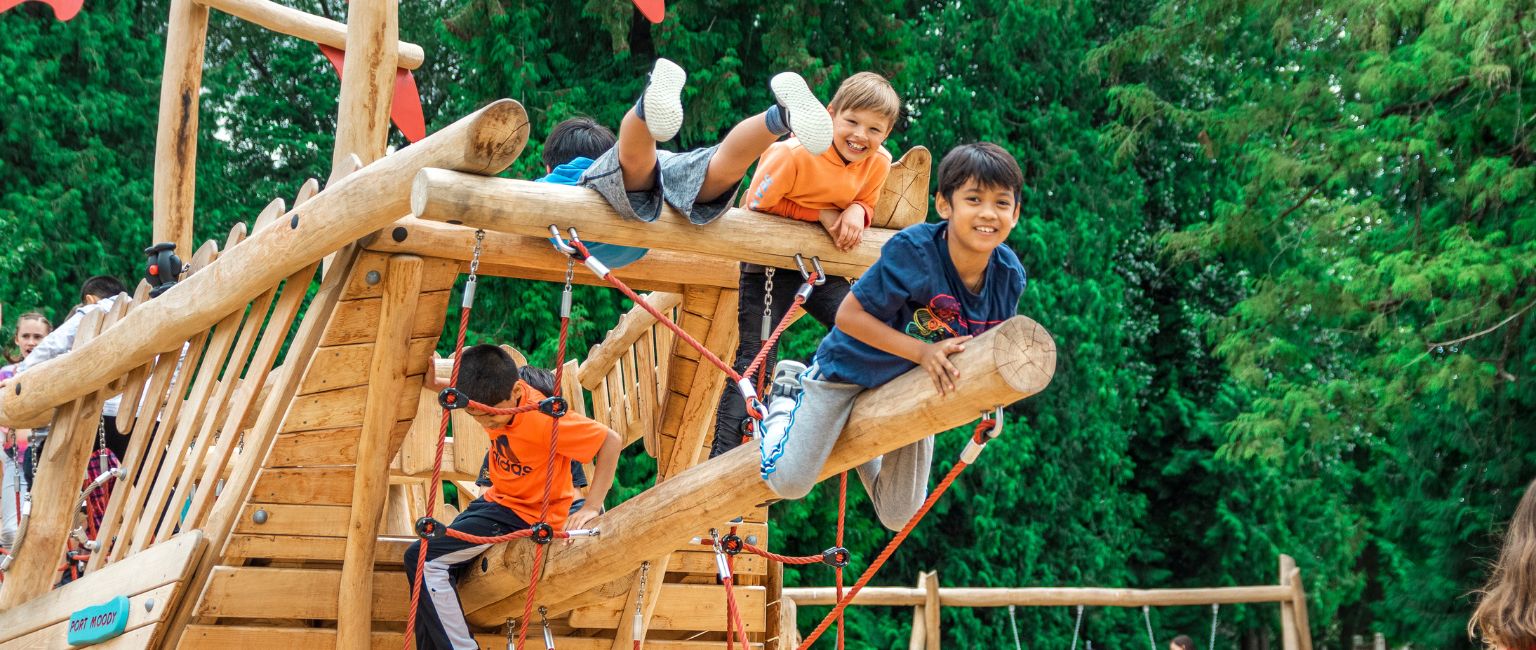
Climbing elements like nets, boulders, and towers encourage children to plan routes, assess risk, and adapt as they move. Themed structures, playhouses, and sensory features support storytelling, role play, and social problem solving.
Natural play elements like logs, sand, water, and boulders invite experimentation, discovery, and hands-on exploration. Group play features such as swings, spinners, seesaws, and other cooperative elements help children build communication, teamwork, timing, and shared decision-making skills. Moveable elements and flexible spaces give children the freedom to invent games and shape their own play experiences.
At Parkworks, we see the most successful playgrounds as the ones that create room for many kinds of play at once. They challenge, inspire, and welcome children into experiences that feel different every time they visit. When there is no single correct way to play, creativity has more room to grow.
Why this matters for the future
The skills children build on the playground are the same ones they will rely on throughout life. Problem solving. Adaptability. Communication. Creativity. Resilience.
Play teaches children to approach uncertainty with curiosity instead of hesitation. It helps them build confidence in their own abilities and learn how to work through challenges independently and with others.
These are not just playground skills. They are life skills.
How communities can support play-based learning through playground design
When playgrounds are designed with childhood development in mind, they do far more than entertain. They become places where children can stretch their abilities, build relationships, and grow through play.
Communities can support play-based learning by creating playgrounds that:
- offer a variety of challenge levels
- include open-ended play opportunities
- support imaginative and social play
- incorporate nature and sensory experiences
- welcome a wide range of ages and abilities
- leave room for children to lead their own play
When discovery and exploration are designed into the experience, playgrounds become places where every climb, conversation, and challenge helps children learn.
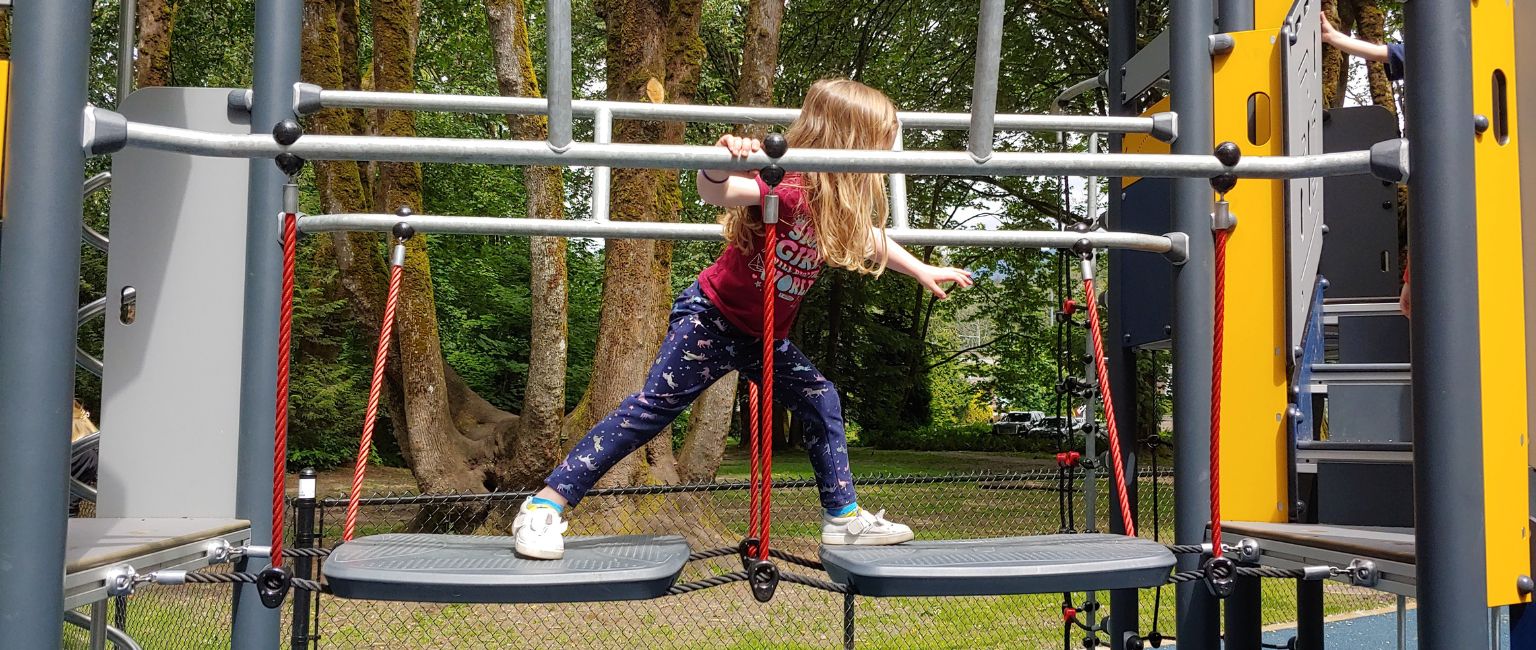
Playgrounds are more than neighbourhood amenities. At their best, they are places where children learn to think, adapt, collaborate, and persist.
At Parkworks, we believe the most meaningful play spaces are the ones that support more than activity. They support growth. When designed to encourage play-based learning, playgrounds help shape the creative, capable problem solvers of tomorrow. Every challenge becomes a chance to build confidence. Every moment of play becomes a moment of growth.